
CoreWeave, Mistral AI's subcontractor: should you worry?
For all its products, Mistral AI declares just two compute operators: its own servers and CoreWeave, whose debt is in distress. What a default would change.
Finally, a bond that inspires even less confidence than French government debt. On 14 October 2026, CoreWeave's notes due 2032 fell below 80 cents on the dollar, a level markets reserve for companies in trouble. The next day, the cost of insuring against a CoreWeave default hit a record: according to Bloomberg, it implies more than a 60% chance of default within five years. CoreWeave is the largest independent renter of graphics processors (GPUs) for artificial intelligence, and it has borrowed more than $35 billion to buy them.
CoreWeave has not defaulted. But for European companies, the name matters: on Mistral AI's subprocessor list, CoreWeave is one of only two compute operators declared for all of its products. The other is Mistral itself. A company that chose France's flagship AI company for sovereignty reasons therefore also depends on a heavily indebted US firm it has never signed anything with. OpenAI lists CoreWeave too, for ChatGPT Enterprise and its API.
If CoreWeave defaulted, your AI tools would not go dark overnight. What you are exposed to is a migration decided by someone else, on a timetable you do not control. To get through it, you need to know who subcontracts what, be able to switch providers, and have already tested that exit.
What is CoreWeave?
CoreWeave is a neocloud: a cloud provider built solely to rent GPU computing power to AI companies. Synergy Research describes neoclouds as "purpose-built to deliver high-performance, GPU-centric computing" for AI. A hyperscaler such as AWS, Azure or Google Cloud sells hundreds of services and funds its data centers with profits from other businesses. A neocloud sells almost nothing but compute, and funds its GPUs with debt.
A former crypto miner based in Livingston, New Jersey, CoreWeave went public on 28 March 2025 at $40 a share. Its accounts show $5.1 billion of revenue in 2025, 67% of it from Microsoft. In the second quarter of 2026, revenue doubled year on year to $2.6 billion, with a net loss of $626 million. It runs 51 data centers in the US, Canada and northern and southern Europe, none of them in France.
Why is CoreWeave's debt worrying investors?
What happened on 14 and 15 October
On 13 October, the yield on one of CoreWeave's bonds hit 15%. Elon Musk replied with a "Yikes". On the 14th, Brannin McBee, the co-founder in charge of financing, told the Financial Times that CoreWeave wanted insurance money to fund its GPUs, a pool he described as "unlimited… all the money in the world". Investors heard something else: a company looking for new lenders because it needs them.
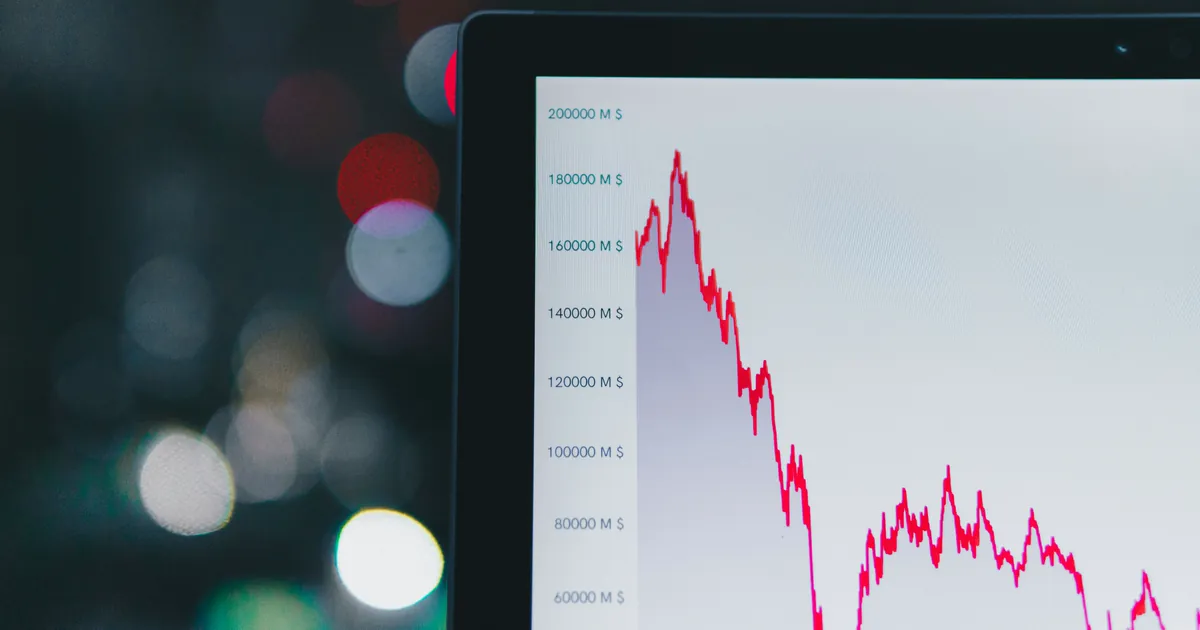
The stock fell 15.46% on 14 October, to $65.78. Its unsecured notes due 2032 dropped below 80 cents, and the 2031 notes yielded more than 16% the next day, according to Reuters. Insuring $1 million of CoreWeave debt against default now costs $100,000 a year, against under $40,000 a year ago. On the same day, Oracle lost 8.8% and Nebius 10.1%.
On 15 October, the stock rebounded 5.9% after Nvidia's chief executive Jensen Huang said that CoreWeave's strength "is improving every day". The rating agencies did not move: S&P rates CoreWeave B+ and Moody's Ba3, both sub-investment grade.
GPUs bought on credit, repaid by customers
CoreWeave's model is a loop. A customer signs a multi-year contract, for example Meta for $14.2 billion through 2031. CoreWeave places that contract in a dedicated subsidiary. The subsidiary borrows to buy the GPUs, installs them in a leased data center, and repays the loan with the customer's payments. Lenders hold the GPUs and the contract as collateral. In its filings, CoreWeave describes these entities as "bankruptcy-remote", designed to stay out of reach if the parent company fails.
More than 98% of its revenue comes from take-or-pay contracts: the customer pays for reserved capacity whether it uses it or not. On paper, the debt repays itself. In practice, the loop has weak points.
The first is size. At 30 June 2026, CoreWeave reported $35.6 billion of debt, plus $16.3 billion of data center lease commitments, and it added $4.2 billion of convertible notes in September. Interest expense reached $640 million in the second quarter, up from $267 million a year earlier. Most of its bank debt carries floating rates, unhedged.
The second is that CoreWeave builds faster than it collects cash, so it has to keep borrowing. It spent $14.1 billion on equipment in the first half of 2026. Deutsche Bank, which still rates the stock a buy, puts the gap between cash generated and planned investment at around $35 billion over twelve months. And $6.2 billion of debt falls due in 2027.
Then there is the awkward question: how long is a GPU worth anything? CoreWeave depreciates its servers over six years, while Nvidia ships a new generation every year or two. If a 2025 GPU can no longer find a buyer at a good price in 2029, later contracts will bring in less than planned.
Dependence runs the other way too: 72% of second-quarter revenue came from three customers. On 8 October, when the Financial Times reported that OpenAI's revenue was lower than previously signalled, CoreWeave's stock fell almost 8%.
What CoreWeave says
Chief executive Mike Intrator told staff that the market is acting "irrationally" and that the company's backlog more than covers its debt. That backlog stood at $103.7 billion at 30 June 2026, not counting more than $25 billion of new commitments early in the third quarter. Operating cash flow was a positive $3.7 billion in the first half. Nvidia is at once its supplier, a shareholder (10.7% of Class A shares) and a customer that has committed to buy its unsold capacity through 2032. Finally, the CDS market for a single company is thin, and the default odds derived from it rest on assumptions.
Nobody knows whether CoreWeave will default. What an IT department can know is whether it depends on it.
Why does Mistral AI depend on CoreWeave?
What Mistral declares
Mistral AI publishes its subprocessor list in its trust center. Four entries cover compute for its main products, Vibe (the name of its assistant since late May 2026, formerly Le Chat) and Studio, its developer platform:
| Operator | Declared role | Location | Products covered |
|---|---|---|---|
| Mistral Compute | Cloud infrastructure | France | All |
| CoreWeave Inc. | Inference Provider | EEA | All SaaS products |
| Microsoft | Cloud Infrastructure | Sweden, Norway | Vibe, Studio / API |
| Cloud Infrastructure | Netherlands, Belgium, United States (US API) | Vibe, Studio / US API |
Only two operators cover every product: Mistral Compute, Mistral's own servers in France, and CoreWeave. CoreWeave is also the only one Mistral describes as an inference provider, meaning the operator that runs the models to answer requests. Mistral does not disclose how compute is split between them. Scaleway, OVHcloud and other hosts also appear on the list, but for a single product, Vibe Code Web.
The relationship goes back a long way. In a case study published by CoreWeave, it starts with an H100 GPU contract signed in 2023, and Mistral's chief technology officer says its models were "trained 100% on CoreWeave infrastructure". Mistral has since been building its own capacity, Mistral Compute, but CoreWeave remains in its production chain.
What this means for sovereignty
CoreWeave's European GPUs are in Sweden, Norway, Denmark, Spain and the UK, not in France. More importantly, CoreWeave's data processing agreement is signed by its US parent, CoreWeave, Inc., under New York law. A US company remains subject to US law, including the CLOUD Act, even when its servers are in Europe: we set out these criteria on our sovereign AI page.
None of this is illegal or hidden. Mistral remains liable to its customers for its subprocessors, its European endpoint guarantees processing in Europe, and Mistral discloses more than most of its competitors: without its list, nobody would know. We flagged it in our analysis of the sovereignty of French AI companies. But CoreWeave's week adds a second risk to the legal one: the financial health of a link the customer never chose.
Mistral is not alone
CoreWeave claims that "nine of the leading ten AI model providers" use its platform. Subprocessor lists show which of them say so publicly:
| AI provider | What its subprocessor list says (16 October 2026) |
|---|---|
| Mistral AI | "CoreWeave Inc. • Inference Provider • EEA" for all its SaaS products |
| OpenAI | "CoreWeave, Inc." for the API, ChatGPT Enterprise, Business and Edu, in Norway, Spain, Sweden, the UK and the US |
| Anthropic | Not listed, despite an April 2026 agreement to run "workloads at production scale" |
| Perplexity | Not listed, despite an inference agreement signed in March 2026 |
OpenAI's list, updated on 14 October, places CoreWeave alongside Microsoft, Oracle, Google Cloud, AWS and Cerebras: one operator among six. Microsoft, CoreWeave's largest customer, does not disclose which services run on that capacity. A company using Copilot or Azure OpenAI therefore cannot tell whether it depends on CoreWeave.
French banks are not far away either: according to a Reuters factbox of 15 October, Crédit Agricole and Société Générale are among the lenders on one of CoreWeave's GPU-backed credit lines.
If CoreWeave defaulted, would your AI stop working?
A default does not switch off the servers
Defaulting means missing a debt payment. It does not cut the power to data centers. In the US, a company in difficulty usually goes through Chapter 11 of the Bankruptcy Code: it keeps operating while it renegotiates its debts. The federal courts' website puts it simply: "the debtor, as 'debtor in possession,' operates the business".
Precedent points the same way. WorldCom and Global Crossing kept their networks running through their 2002 bankruptcies. Core Scientific, now one of CoreWeave's landlords, went through Chapter 11 from December 2022 to January 2024 without stopping operations.
Customers could not walk away just because of the bankruptcy either. The master agreements that Microsoft, OpenAI and Meta signed with CoreWeave, filed as exhibits with the SEC, allow termination if CoreWeave files for bankruptcy. But in Chapter 11, US law generally makes such clauses unenforceable: a contract "may not be terminated or modified" solely because of the filing. French insolvency law has the same rule. CoreWeave, for its part, could keep profitable contracts and reject the others.
The GPUs would change owners, not location
This is our reading of the filings, not a forecast. The GPUs sit in subsidiaries pledged to lenders. In a default, those lenders could take control of them, together with the contracts that fund them. They would have every reason to keep them running: a switched-off GPU repays nothing. Microsoft, Meta or Nvidia could also take over capacity they need.
For a company using Vibe, Mistral's API or ChatGPT, the effect would be indirect. Mistral could shift the load to Mistral Compute and, for Vibe and Studio, to Microsoft and Google; OpenAI has five other operators. What could change: tighter quotas, slower responses, higher prices if capacity becomes scarce, or a new list of subprocessors, and therefore of processing countries, decided without you.
The real danger: liquidation and short notice
The dangerous scenario is liquidation (Chapter 7 in the US), in which the company sells its assets and shuts down. Cloud customers have been there before. In September 2013, the storage provider Nirvanix announced its closure and gave customers about two weeks to retrieve their data. The same year in the UK, the administrators of the IT services firm 2e2 asked its data center customers to pay to keep the servers on, up to £40,000 each, with a warning: "You will need to put alternative arrangements in place with immediate effect".
For CoreWeave, this scenario remains unlikely in the short term, given its cash flow and the size of its customers, and no major neocloud has gone bankrupt so far. You still need to be able to survive it, as you would a fire: the one at OVHcloud's Strasbourg site in March 2021 took around 3.6 million websites offline, many of them backed up in the same building.
What does European law say?
DORA already plans for a provider's bankruptcy
For banks, insurers and asset managers, the EU's Digital Operational Resilience Act (DORA), in force since 17 January 2025, is explicit. The exit strategy must take account of a possible failure of the provider (Article 28). The assessment of concentration risk must consider the insolvency rules that would apply if the provider went bankrupt, and any obstacle to recovering data urgently (Article 29). Contracts must guarantee access to data if the provider becomes insolvent (Article 30). Each firm keeps a register of all its ICT service contracts.
The list of 19 ICT providers designated as critical for European finance, published on 18 November 2025, contains no neocloud. Yet a bank using ChatGPT Enterprise depends on CoreWeave one level down. On 15 October, Denis Beau, president-designate of the French banking supervisor ACPR, warned that supplier concentration "in itself constitutes a new operational risk" (our translation).
The Data Act helps you leave, not survive a bankruptcy
Since 12 September 2025, the EU Data Act has governed switching between cloud providers: at most two months' notice, a 30-day transition during which the service continues, and no switching charges from 12 January 2027. That helps you leave a provider that works, much less one that is insolvent. CoreWeave has published its own Data Act addendum: you can leave on two months' notice, but "Early Termination shall not relieve Customer of its obligation to pay all fees payable".
The GDPR requires you to know your subprocessors
Article 28 of the GDPR bars a processor from engaging another one without the customer's authorisation, and requires it to report any change so the customer can object. In practice, the authorisation is general and the window is short. At Mistral AI, customers are notified by email "If Customer subscribes to receive updates", and a new subprocessor is deemed approved if they do not object within ten days.
NIS2, which requires supply-chain security from essential and important entities, has still not been transposed in France: the European Commission took the country to the Court of Justice in July 2026.
What an IT department can do now
- Map the chain two levels down. For each AI tool, read the vendor's subprocessor list, then its model provider's. Note who operates the compute, in which country, and who owns them. It takes about an hour per provider, and it is what DORA calls a register.
- Subscribe to subprocessor change notifications. Without a subscription, the objection window runs without you.
- Ask each provider for its failover plan. If a compute operator goes down, where does the load go, how fast, and to which countries? A provider with a single operator for a given model is a single point of failure.
- Stay portable. An open model can be served by a dozen providers, one of the benefits of open weights models. A multi-provider gateway switches from one provider to another without rewriting applications, and it is what makes service levels above 99.9% achievable.
- Export what matters. Search indexes, prompts, agent configurations, fine-tuning data: anything slow to rebuild should exist somewhere other than at the provider.
- Write the exit into the contract. Reversibility clause, notice period, access to data in case of insolvency, transition period. Article 30 of DORA is a good template, even outside financial services.
- Do not overreact. A CDS spread is not a default. The signals to watch: the ratings, the refinancing of the 2027 maturities, and the next quarterly results, in November if CoreWeave keeps to its usual calendar.
CoreWeave is one example of a broader issue, Europe's digital dependence on the United States: you choose a French vendor, and the compute ends up with an indebted American GPU landlord.
What about Ask This Guy?
No impact expected for our customers, and the reason comes down to one number: our AI provider gateway relies on eleven AI providers, plus models we run ourselves on our own GPUs at Verda, in Finland and Iceland. CoreWeave is not one of them, and Ask This Guy has no contract with it.
CoreWeave only appears one level down, at two of those providers: Mistral AI, and TypeSafe AI for reranking search results, the latter only under the "Worldwide" policy. The gateway already spreads requests and fails over when a provider slows down or drops out. Under the "EU only" policy, Mistral is one option alongside Scaleway, Nebius and our own GPUs. If CoreWeave went down, the worst case for us would be one less available provider while Mistral shifts its load, which failover already absorbs.
Frequently asked questions about CoreWeave
What is CoreWeave?
CoreWeave is a US company based in New Jersey, listed on Nasdaq since March 2025, that rents GPU computing power to artificial intelligence companies. It runs 51 data centers in the United States, Canada and Europe, and its customers include Microsoft, OpenAI, Meta, Anthropic and Mistral AI. It generated $5.1 billion of revenue in 2025.
Does Mistral AI use CoreWeave?
Yes. On its subprocessor list, Mistral AI declares only two compute operators for all its products: its own servers in France, Mistral Compute, and CoreWeave, designated as an inference provider in the European Economic Area. Microsoft and Google appear only for Vibe and Studio. How compute is split is not disclosed. The relationship dates back to 2023, and according to a CoreWeave case study, Mistral's models were trained entirely on its infrastructure.
What is a neocloud?
A neocloud is a cloud provider that specialises in renting GPUs for artificial intelligence, unlike hyperscalers such as AWS, Azure or Google Cloud, which offer hundreds of services. Neoclouds, including CoreWeave, Nebius, Lambda, Crusoe and Nscale, largely finance their GPUs with debt backed by contracts with a few large customers.
Is CoreWeave going bankrupt?
Nobody can say. As of 16 October 2026, CoreWeave has neither defaulted nor filed for bankruptcy protection. Its bonds and credit default swaps price in a high risk, more than a 60% chance of default within five years according to Bloomberg, but the company has a $104 billion backlog and positive operating cash flow.
Who are CoreWeave's customers?
Microsoft accounted for 67% of CoreWeave's revenue in 2025. Its other major customers are OpenAI (contracts worth about $22.4 billion), Meta ($14.2 billion, then about $21 billion more), Nvidia, Jane Street, Anthropic, Perplexity, IBM and Mistral AI. In the second quarter of 2026, its top three customers accounted for 72% of revenue.
What happens to customers when a cloud provider goes bankrupt?
It depends on the procedure. In a restructuring (Chapter 11 in the US, safeguard or receivership in France), the company usually keeps operating, and contracts cannot be terminated solely because of the filing. In a liquidation, the service can stop at very short notice: in 2013, Nirvanix customers had about two weeks to retrieve their data.
The AI bubble can be debated at length. CoreWeave's week makes a more down-to-earth point: a large share of AI compute, European AI included, runs on a handful of GPU landlords financed on credit, invisible from the customer's side. Choosing Mistral is still a sound sovereignty choice; it does not replace reading its subprocessor list. No IT department needs to bet on CoreWeave's credit rating. Each one can find out, for every AI tool, who runs the compute, and what it would do the day that stops.