Gemma 5 release date: what Google has said since Gemma 4
Gemma 5 has not been announced. What Google has shipped since Gemma 4, when Gemma 5 could land, and why Gemma 4 31B still writes better French than Qwen 27B.

On 2 April 2026, Google released Gemma 4, its family of open-weight models, under a tagline that summed up the ambition: "Byte for byte, the most capable open models". The 31-billion-parameter model was then the third-ranked open model on the Arena leaderboard, and for the first time the license was Apache 2.0, with no usage restrictions. Eight months later, there is no Gemma 5: the Gemma release page stops at an embedding model published on 6 October, and the latest text-model weights Google uploaded to Hugging Face date from 5 June.
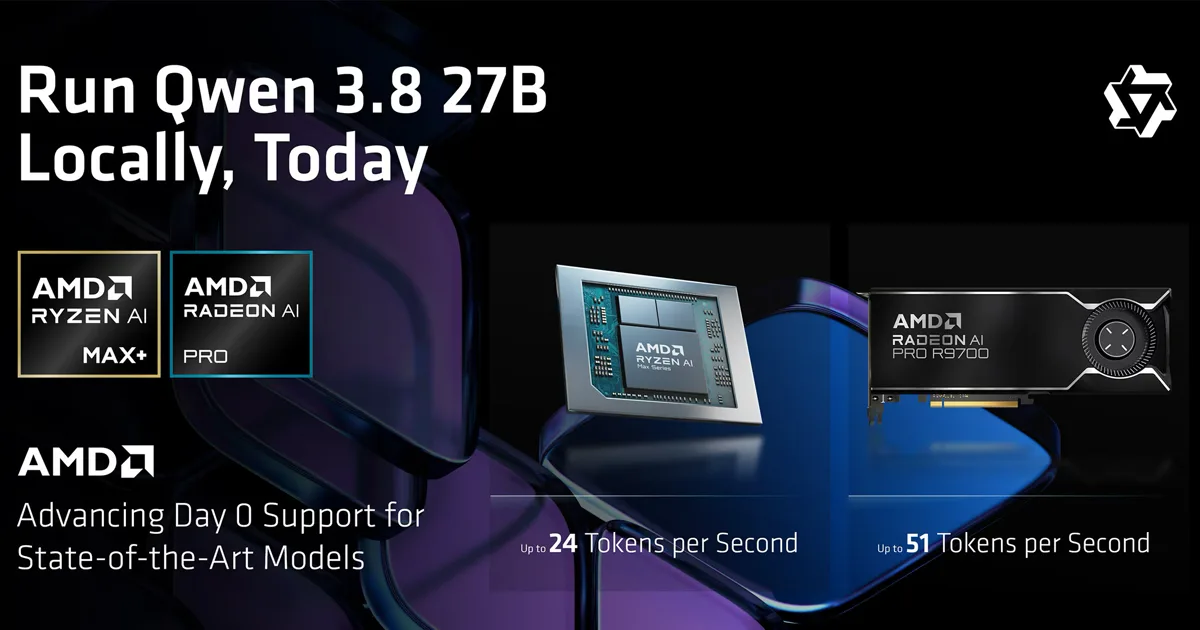
Meanwhile, Alibaba has shipped three versions of its dense Qwen 27B model in six months, and Qwen 3.8 27B scores five times as much as Gemma 4 31B on the Artificial Analysis index. Gemma looks outdated. On reasoning, it is. In French, it is not: in compar:IA, the French Ministry of Culture's model arena, where users vote blind between two answers, Gemma 4 31B is the top open model, while Qwen 3.8 27B ranks 100th out of 127.
So when is the Gemma 5 release date? Google has not said. But every Gemma generation is built from the technology of the Gemini that precedes it, and ships two and a half to four and a half months after it. Gemini 4 Argon came out on 13 October. If the gap repeats, Gemma 5 would land between late December 2026 and late February 2027.
Has Gemma 5 been announced?
No. Google has published no blog post, model card or date for a Gemma 5. The name itself comes from the community: it is the title r/LocalLLaMA gave to a question from Google, according to IAMag. Pages announcing "Gemma 5" with sizes and benchmark scores are speculation, or relabeled Gemma 4 listings.
What Google has shipped since Gemma 4
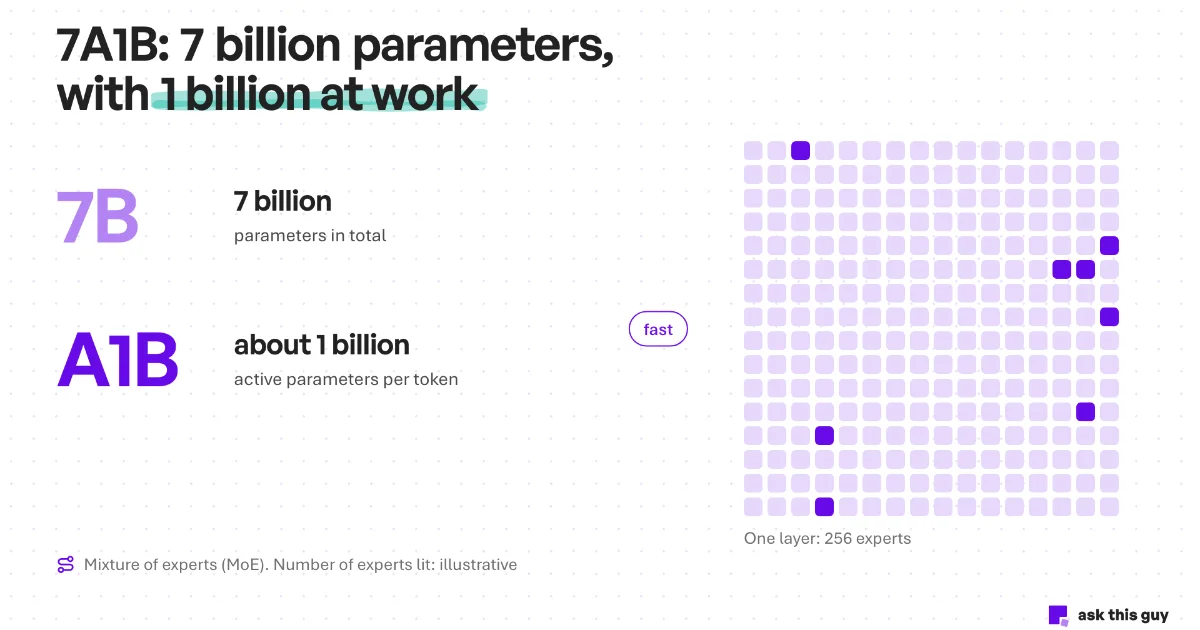
Gemma is Google's family of open-weight models: anyone can download the weights and run the model on their own hardware, unlike Gemini, the closed model Google sells through its API. Gemma 4 came in four sizes: two small models for phones and devices (E2B and E4B), a 26-billion-parameter MoE that activates only 3.8 billion per token, and a 31-billion-parameter dense model whose weights fit on a single 80 GB GPU.
Since then, Google has extended the family without renewing it. The release page and Google DeepMind's Gemma page list faster decoding through multi-token prediction (April), a Gemma 4 12B built for 16 GB of memory (3 June), compressed QAT versions and an experimental diffusion model (June), then EmbeddingGemma 2, a model that turns text into vectors for document search (6 October).
On 20 August, Google celebrated one billion downloads of the Gemma family and over 100,000 variants published by developers. It claimed 400 million on Gemma 4's launch day: 600 million downloads in four and a half months, driven by Gemma 4. The post says nothing about a next model.
The signals worth reading
Three facts from the autumn suggest the Gemma team is preparing what comes next, without promising anything.
Omar Sanseviero, Developer Experience Lead at Google DeepMind, publicly asked developers on X what they wanted in the next Gemma models, once in late July according to Digg and again on 28 October according to IAMag. Replies asked for bigger models, better tool calling, more languages, audio, and an MoE stronger than the 31B dense model. As IAMag notes, nobody at Google has said how far along development is.
On 13 October, the Gemini 4 Argon launch post cited Gemma as a use case: using Argon, a Google team made Gemma 4 E2B inference 2.85 times faster in vLLM, an open-source inference engine, within a few days.
Finally, Google DeepMind open-sourced gBench, picked up by the press on 24 November. The repository describes itself as an "evaluation, serving performance, and release-readiness benchmark harness for Gemma and open-weights LLMs": 86 academic test suites, 16 deterministic checks, 60 agentic scenarios, latency and throughput measurements. Its co-author, Luciano Martins, also signed the vLLM optimizations for Gemma 4 cited in the Argon post. We read this as a team tooling up for its next releases. It is only a reading: the repository mentions no upcoming model.
When will Gemma 5 be released?
The best clue is the Gemini calendar. Google presents every major Gemma as the open cousin of the Gemini of the day: Gemma 1 was "built from the same research and technology used to create the Gemini models", Gemma 3 drew on the technology behind Gemini 2.0, and Gemma 4 on Gemini 3.
| Gemini | Release | Gemma built on it | Release | Gap |
|---|---|---|---|---|
| Gemini 1.0 | 6 December 2023 | Gemma 1 | 21 February 2024 | 77 days |
| Gemini 2.0 | 11 December 2024 | Gemma 3 | 12 March 2025 | 91 days |
| Gemini 3 | 18 November 2025 | Gemma 4 | 2 April 2026 | 135 days |
| Gemini 4 Argon | 13 October 2026 | Gemma 5? | not announced | 42 days as of 24 November |
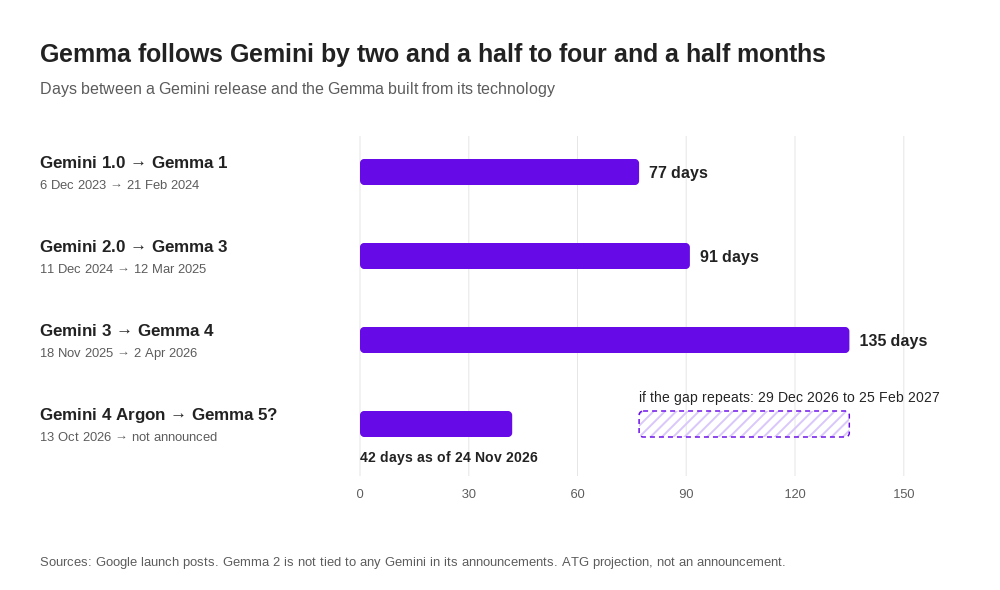 Bar chart of the gap between a Gemini release and the Gemma built from its technology: 77 days from Gemini 1.0 to Gemma 1, 91 days from Gemini 2.0 to Gemma 3, 135 days from Gemini 3 to Gemma 4. For Gemini 4 Argon, released on 13 October 2026, 42 days elapsed as of 24 November 2026 and a hatched window from 29 December 2026 to 25 February 2027 if the gap repeats
Applied to Gemini 4 Argon, the observed gap gives a window from 29 December 2026 to 25 February 2027. The exercise has limits: the gap grows with each generation, and three data points do not make a rule. Gemma 2, released in June 2024, is not tied to any Gemini in its announcements, so Google does not always follow this pattern.
Forecasters are more cautious than this calculation. On Manifold, a play-money prediction platform, the market on the Gemma 5 release date gives, as of 24 November, a 5% chance of a release before 2027, 59% before April 2027 and 84% before July 2027. Only twelve traders have bet on it, the last one on 13 November: it is a sentiment, not information.
The silence is nothing unusual for Google. According to the release page, Gemma 2 came four months after Gemma 1, Gemma 3 eight and a half months after Gemma 2, and Gemma 4 almost thirteen months after Gemma 3. Gemma 4 is only eight months old. Google is keeping its pace, its competitors have sped up.
Has Gemma 4 been overtaken?
On reasoning, coding and agents, yes. The direct competitor is Qwen 3.8 27B, a 27-billion-parameter dense model released on 14 August under the Apache 2.0 license, the same as Gemma 4. In version 5.0.1 of the Artificial Analysis index, which aggregates reasoning, coding and agentic tests, Qwen 3.8 27B scores 20 and Gemma 4 31B scores 4. In the previous version, recorded on 21 October, the gap was 34 to 15.
Part of the gap comes from reasoning effort. Qwen 3.8 27B, set to its maximum, "thinks" for a long time before answering, which burns a lot of tokens. Without reasoning, it drops to 10 points, still more than twice Gemma 4 31B.
Comparing it with DeepSeek V4.1 Flash, another recent Chinese model, is misleading, though. Despite its name, DeepSeek V4.1 Flash is a 552-billion-parameter MoE, DeepSeek's entry-level model but not a small one: serving it takes several GPUs, while Gemma 4 31B and Qwen 3.8 27B fit on one. The comparison only makes sense through an API, where you pay per token regardless of size.
Gemma 4 is still widely used. Over the last thirty days, Gemma 4 31B was downloaded 5.6 million times on Hugging Face, against 6.1 million for Qwen 3.8 27B: teams do not pick their model from a single leaderboard.
Gemma 4 31B vs Qwen 3.8 27B: language makes the difference
At Ask This Guy, Gemma 4 31B wrote our assistant's answers before Qwen 3.8 27B. We switched for two reasons: many inference providers deprecated Gemma 4 31B in favor of Qwen 3.8 27B, and the latter is better at agentic tasks, where the model calls tools and chains steps. Cerebras removed Gemma 4 31B from its shared inference on 3 September, pointing customers to Qwen 3.8 27B, and in France, Scaleway and OVHcloud both serve Qwen 3.8 27B but not Gemma 4 31B. On our workloads, which mean answering from company documents, reasoning stayed at a very similar level. French quality, on the other hand, dropped clearly: Qwen 3.8 27B makes real mistakes, grammar mistakes in particular, that Gemma 4 31B did not make. Our test of the French written by six models has since measured it: out of 96 texts each, Qwen 3.8 27B made at least one major error in 23, Gemma 4 31B in 6.
We are not the only ones to see it. compar:IA, the French Ministry of Culture's arena, asks users to vote between two anonymous answers to questions they ask themselves, mostly in French since the service is French. The resulting score measures human preference, not whether the answers are correct.
| Model | Size | Artificial Analysis index (v5.0.1) | compar:IA score | compar:IA rank |
|---|---|---|---|---|
| Gemma 4 31B | 31 billion, dense | 4 | 1,099 | 16th of 127 |
| Qwen 3.8 27B | 27 billion, dense | 20 | 959 | 100th |
| Mistral Small 4 | 119 billion, MoE | 4 | 1,038 | 51st |
| DeepSeek V4.1 Flash | 552 billion, MoE | 33 | 1,008 | 69th |
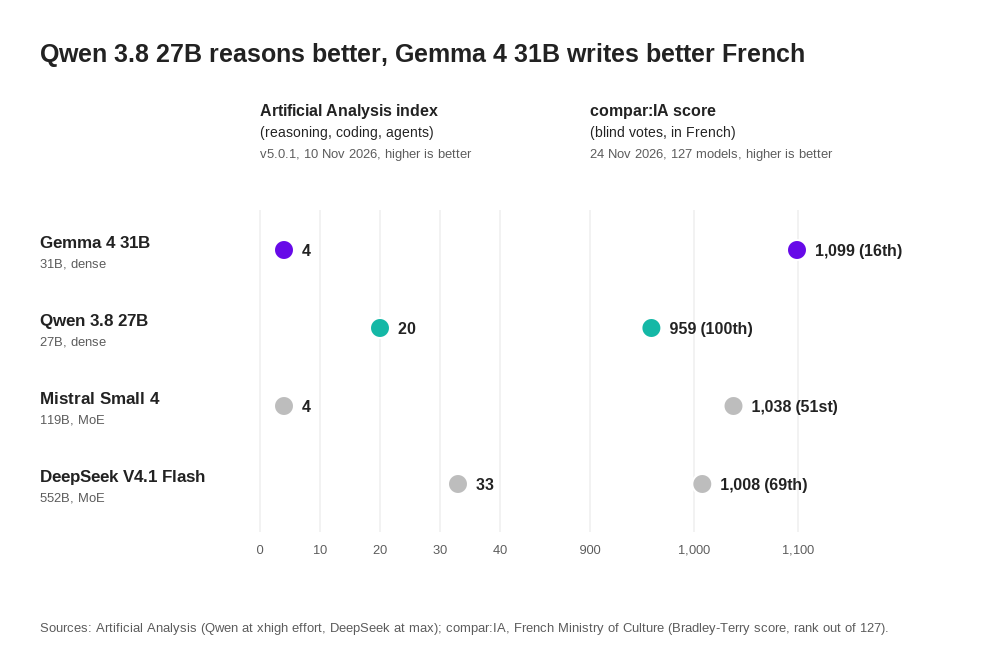 Two rankings side by side for four models. Artificial Analysis index v5.0.1 of 10 November 2026 (reasoning, coding, agents): Gemma 4 31B 4, Qwen 3.8 27B 20, Mistral Small 4 4, DeepSeek V4.1 Flash 33. compar:IA score of 24 November 2026 (blind votes, in French): Gemma 4 31B 1,099 (16th), Qwen 3.8 27B 959 (100th), Mistral Small 4 1,038 (51st), DeepSeek V4.1 Flash 1,008 (69th)
In the 24 November ranking, the top fifteen spots go to closed models: Claude, GPT, Gemini Flash. Gemma 4 31B is the top open model, 6 points behind Gemini 3.8 Flash. It beats Mistral Medium 3.5 (1,064), DeepSeek V4 Pro (1,052) and Mistral Large 4 (1,050), models four to fifty times its size. Qwen 3.8 27B ranks 100th, just ahead of gpt-oss-120b, OpenAI's open model (954).
Three caveats. compar:IA compares answers, substance and form, not agentic tasks where the model calls tools and chains steps, which is precisely where Qwen 3.8 27B pulls ahead. Nor does it grade grammar: a vote also rewards tone, structure or relevance, even though the site partly corrects for length and formatting. And the questions are general-purpose, far from answering from company documents. Still, the confidence intervals do not overlap: Gemma 4 31B sits between 10th and 22nd place, Qwen 3.8 27B between 85th and 110th.
A reasoning leaderboard says nothing about the quality of a language. A model that writes to customers or colleagues should also be judged on its French, or German, or Spanish, and that has to be measured separately. In our test, where two automated judges graded the texts blind, Gemma 4 31B scores 4.77 out of 5 and Qwen 3.8 27B 4.43. DeepSeek V4.1 Flash (4.90) and Mistral Large 4 (4.84), much larger models, still do at least as well as Gemma: its top spot among open models on compar:IA is not only about correct French.
What should Gemma 5 bring?
Nothing has been announced, but three questions will decide how useful it is for a company.
The license first. Gemma 4 moved from Google's own terms, which allowed Google to restrict some uses, to Apache 2.0. Going back would remove much of the model's appeal. We explain what changes from one license to another in our article on open model licenses.
Size next. The community is asking for an MoE stronger than the 31B dense model, which would follow the general trend among large open models. A bigger MoE generates faster but needs more memory: choosing between dense and MoE is not just about scores.
Language last. Gemma 4 was trained on over 140 languages and went from 67.6% for Gemma 3 to 85.2% on MMMLU, a multilingual question-answering test. It is its clearest edge over Chinese models of the same size. If Gemma 5 catches up with Qwen on reasoning without losing on language, it would become the obvious choice for a European-language assistant hosted in Europe.
On release day, four things will need checking: the license, the memory required, independent results on reasoning and on language, and a test on your own documents.
What a company can take away
Waiting for Gemma 5 is no reason to put a project on hold. In a well-built application, with an LLM gateway between the code and the models, switching models takes a few days. What is usually missing is the test set that settles the question: a hundred real questions, in the language of your users, with the expected answers, rerun on every new model.
For an assistant that writes in French to customers, Gemma 4 31B remains, in November 2026, the best open model that fits on a single GPU. For coding, analysis or agents, Qwen 3.8 27B is ahead. Both are under Apache 2.0 and are served from Europe: Gemma 4 31B at Cloud Temple, STACKIT or Berget AI, Gemma 4 26B at Scaleway and OVHcloud. The publisher's nationality, American for Gemma and Chinese for Qwen, affects the model's language and biases, not where the data is processed: you can build sovereign AI with either.
Frequently asked questions about Gemma 5
Has Gemma 5 been released?
No. As of 24 November 2026, Google has announced no name, date or size for Gemma 5. The latest release in the Gemma family is EmbeddingGemma 2, an embedding model published on 6 October 2026, and the latest text models are the compressed versions of Gemma 4, from June 2026.
What is the Gemma 5 release date?
Google has not given one. Every major Gemma ships 77 to 135 days after the Gemini whose technology it reuses. With Gemini 4 Argon released on 13 October 2026, Gemma 5 would arrive between late December 2026 and late February 2027 if that pace holds. This is a projection, not information from Google. On Manifold, forecasters are more cautious: a 5% chance before 2027, 59% before April 2027.
What is the difference between Gemma and Gemini?
Gemini is Google's closed model, available only through its API and apps. Gemma is a family of smaller models built with the same technology, whose weights Google publishes: anyone can download, modify and run them on their own servers, under the Apache 2.0 license since Gemma 4.
Gemma 4 31B vs Qwen 3.8 27B: which one should you pick?
It depends on the task. Qwen 3.8 27B scores 20 on the Artificial Analysis index against 4 for Gemma 4 31B: it leads on reasoning, coding and agents. In French, Gemma 4 31B is the top open model in the compar:IA arena, 16th out of 127, while Qwen 3.8 27B is 100th. For an assistant that writes in French, Gemma 4 31B remains the better choice.
Is Gemma 4 good at French?
Yes, it is its strong point. Google says it was trained on over 140 languages, and Gemma 4 31B is the highest-ranked open model on compar:IA, the French Ministry of Culture's French-language arena, ahead of Mistral Medium 3.5, Mistral Large 4 and DeepSeek V4 Pro. In our test of 576 French texts, it scores 4.77 out of 5, just behind the much larger DeepSeek V4.1 Flash and Mistral Large 4, and well ahead of Qwen 3.8 27B (4.43). It still occasionally invents a word.
What hardware does Gemma 4 31B need?
Gemma 4 31B is a dense model with 30.7 billion parameters. At full precision (BF16), its weights take 62.5 GB and fit on an 80 GB GPU. Quantized to 4 bits, it fits on a 24 to 32 GB card, with less room for long conversations.
Is DeepSeek V4.1 Flash comparable to Gemma 4 31B?
Not in size. DeepSeek V4.1 Flash is a 552-billion-parameter MoE that needs several GPUs, while Gemma 4 31B fits on one. The two can only be compared through an API, on price per token and answer quality.
Gemma 4 showed that a 31-billion-parameter open model could write French as well as models thirty times its size. When Gemma 5 comes out, the first thing we will check is whether it keeps that language edge, which reasoning leaderboards do not measure. Catching up with Qwen on reasoning comes second.